
When Your Scribe Becomes a Medical Device: What the New Ambient Voice Technology Guidance Signals
 Melissa Patrick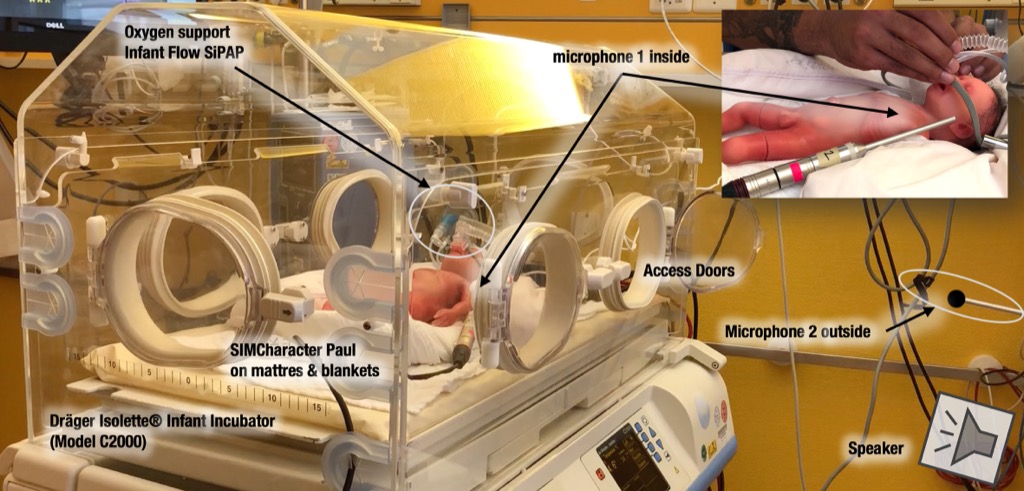
Image: “Recording noise, speech and music inside an incubator” via Wikimedia Commons, licensed under CC BY-SA 4.0.
The line between “productivity software” and “regulated medical device” is moving toward ambient AI scribes — and a new MHRA guidance just drew part of it.
Late this week, the UK’s Medicines and Healthcare products Regulatory Agency (MHRA) issued fresh guidance on how it will regulate Ambient Voice Technology — the category that includes the AI scribes now embedded in exam rooms worldwide. The headline is deceptively simple and genuinely consequential: depending on what these tools do, they may qualify as medical devices, with all the regulatory obligations that classification carries. Even for practices outside the UK, this is a signal flare. When a major regulator formally draws the line between “productivity software” and “regulated medical device,” the entire market takes note.
Why the “Device” Question Is the Whole Ballgame
The distinction sounds technical, but it reshapes accountability. A tool that merely transcribes speech into text sits comfortably in the productivity-software category. But the moment a system does more — interpreting a clinical conversation, summarizing it, suggesting diagnoses or codes, or generating content that influences a clinical decision — regulators increasingly view it as software that has a medical purpose. And software with a medical purpose can meet the definition of a medical device, triggering requirements around safety validation, risk management, post-market surveillance, and clear evidence that the tool does what it claims.
This is exactly where ambient AI scribes live. They do not just transcribe; they structure, summarize, and increasingly infer. The MHRA guidance essentially tells vendors and clinicians that the more a scribe interprets rather than merely records, the more likely it crosses the threshold into regulated territory. That is not a warning to stop using these tools. It is a warning to understand what you are actually using.
What This Means for Vendors — and for You
For vendors, the implication is a maturing compliance bar. Tools that want to operate in the summarization-and-inference space will need to demonstrate the kind of validation and safety documentation that regulated devices require. That will separate serious platforms from lightweight apps, and it will likely accelerate the consolidation already underway in the scribe market. Practices should expect their vendors to speak fluently about how their product is classified and what evidence backs it.
For clinicians and administrators, the practical question becomes due diligence. When you evaluate or renew an AI scribe, you should be able to answer: Has the vendor assessed whether their product is a medical device in the jurisdictions where you operate? If it is, can they show the appropriate registration and conformity evidence? If they claim it is not, is that claim credible given how much the tool interprets rather than transcribes? “It’s just a note-taker” is a comforting answer, but as regulators sharpen their definitions, it may not survive scrutiny.
Getting Ahead of the Curve
The safest posture is to treat regulatory classification as a standing question, not a one-time checkbox. Ask your vendor for their current classification assessment and for a commitment to notify you if it changes as their product adds capabilities. Fold that documentation into your existing governance file alongside your data-handling and consent records. And frame the whole exercise for your clinicians not as bureaucracy but as protection: knowing your tool’s regulatory status is part of knowing your own exposure.
The broader trajectory is clear. As ambient scribes take on more interpretive work, the line between helpful software and regulated device will keep moving toward them, not away. The MHRA’s guidance is one of the first formal maps of that line. Practices that read the map now — and choose vendors who take it seriously — will be positioned to keep the benefits without being caught off guard when their own regulators follow.
The Takeaway
New MHRA guidance signals that AI scribes which summarize, interpret, or influence clinical decisions may qualify as regulated medical devices, not just productivity software. The more a tool infers rather than transcribes, the more likely it crosses that line. Practices should ask vendors directly about their device classification and supporting evidence, and fold that into their governance records. Regulatory scrutiny is moving toward ambient scribes, not away — and knowing your tool’s status is part of knowing your own risk.
MyMediScribe treats regulatory classification as a first-class question — because knowing what your documentation tool is, in the eyes of regulators, is part of using it responsibly.
Ready to put a documentation partner that takes regulatory classification seriously to work in your practice? Start your MyMediScribe signup and use promo code MEDI4939 at checkout.
Sources
- Medicines and Healthcare products Regulatory Agency (MHRA). “Medical devices: software and artificial intelligence (AI).” Guidance, updated 2025. MHRA software and AI guidance
- MHRA. “Medicines and Healthcare products Regulatory Agency.” Organisation homepage. MHRA